
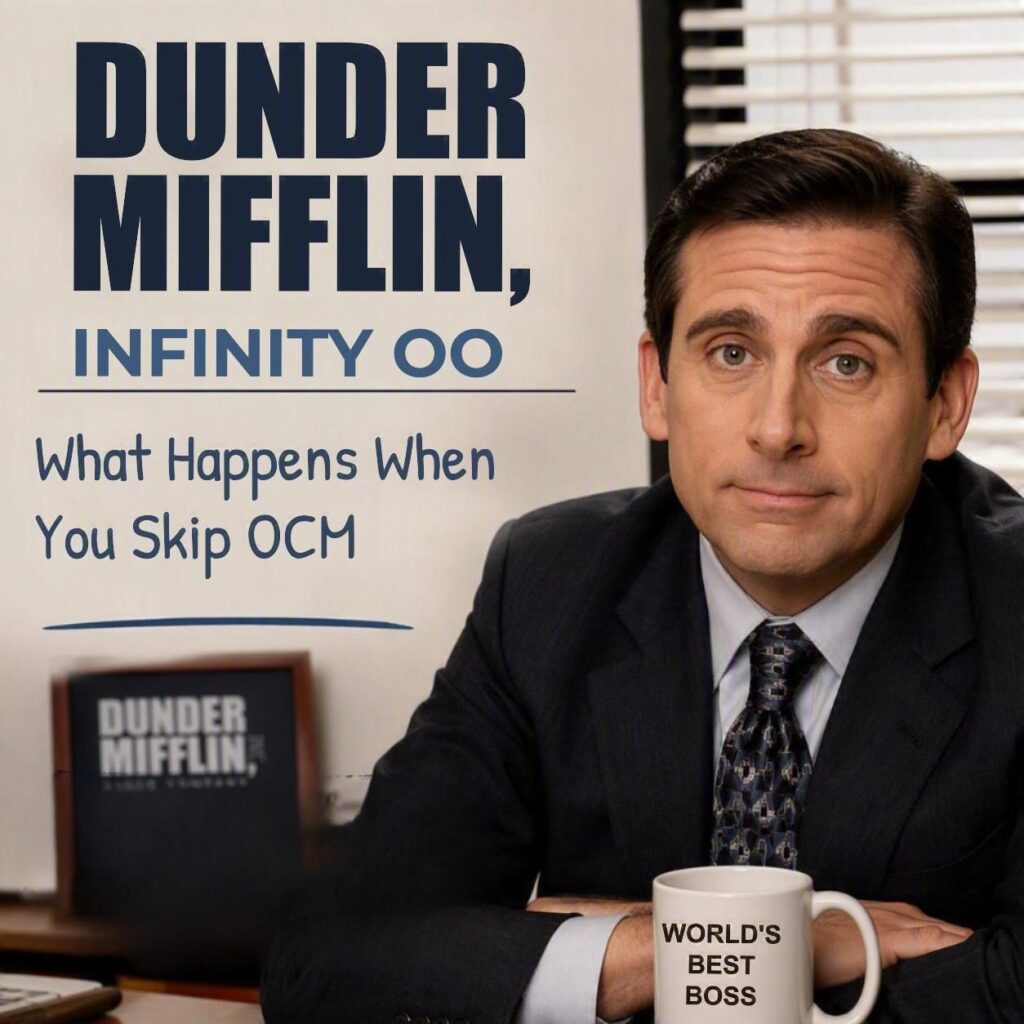
I recently returned from maternity leave after welcoming my third baby. Between the late nights, early mornings, and endless baby snuggles, I found myself rewatching one of my tried-and-true favorites: The Office.
As I watched the episodes about Ryan launching Dunder Mifflin Infinity, I couldn’t stop thinking: If Ryan and leadership had invested in Organizational Change Management (OCM), Dunder Mifflin Infinity might have succeeded.
Looking at the rollout through an OCM lens, several issues stood out:
✅ Michael Scott wasn’t bought into the change, and his resistance quickly influenced the rest of the branch.
✅ Employees didn’t understand why the change was happening.
✅ Sales staff worried the new system would diminish their value or even eliminate their jobs.
✅ Michael wasn’t included in leadership discussions and was left uninformed throughout much of the process.
It’s difficult to champion a change you don’t understand or feel included in.
There were countless opportunities to improve the Dunder Mifflin Infinity rollout, but the person I keep coming back to is Michael Scott. One of the most important aspects of OCM is recognizing that change isn’t one-size-fits-all. Effective change strategies are adapted to the people involved.
Anyone who worked with Michael for more than a few days knew he wanted to feel informed, included, and valued. Had leadership kept him engaged, sought his input, and treated him like a key stakeholder, they likely would have gained one of their strongest change champions.
Instead of resisting the initiative, Michael could have helped ease concerns, reinforce the benefits, and drive adoption across the branch.
The irony is that the customers actually wanted the change. We see this when Michael and Dwight reconnect with former clients who appreciated the convenience and capabilities of the online platform. The technology solved a real problem. The missing piece was adoption. Without employee buy-in, a clear understanding of the why, and active change champions, even the right solution can fail.
Leaders, what are you doing today to ensure your managers become champions of change rather than sources of resistance?
Because even the best strategy can fail when the people responsible for bringing it to life aren’t brought along on the journey.
And, as we all know, that failure ultimately led Ryan to start manipulating the numbers to prove success.
So I guess the moral of the story is: OCM can’t always guarantee success… but it just might save you from committing fraud. 😉